
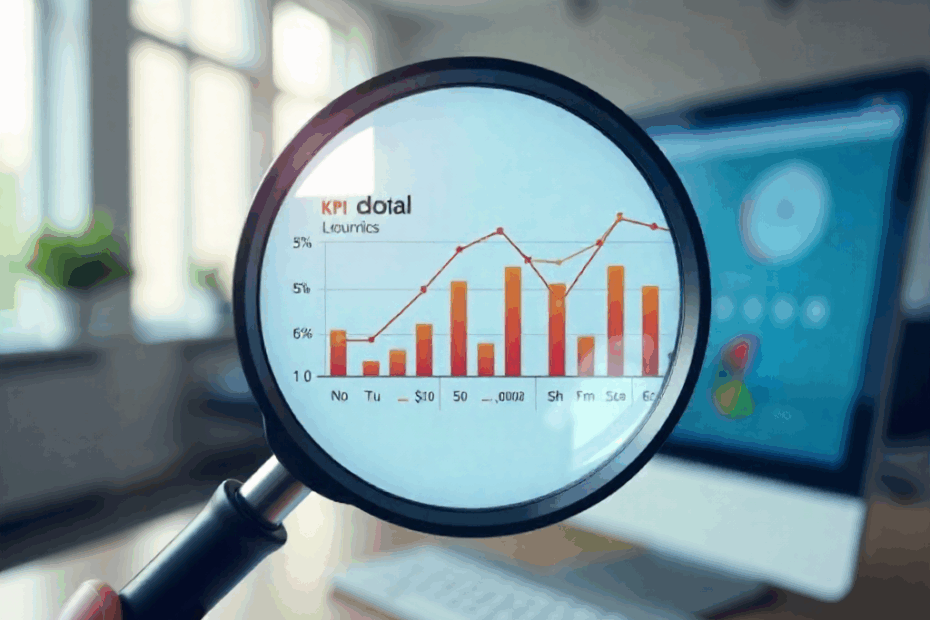
In today’s fast-changing business world, organizations can no longer rely solely on gut feeling or experience. Decisions must be driven by “measurable data.” Key Performance Indicators (KPIs) are key tools that help organizations effectively assess progress and measure success.
What is a KPI?
KPI stands for Key Performance Indicator, which refers to an index used to measure the efficiency or success of operations compared to established goals or standards. Each abbreviation can be explained as follows:
- K (Key): The core or important goal of success.
- P (Performance): Efficiency or performance
- I (Indicator): Index or indicator
KPIs can be used at the organizational, departmental, and individual levels to help organizations track results and make targeted improvements.
Types of KPIs
KPIs can be divided into two main types:
1. Direct measurement – is a measurement that uses “numbers” and tangible data such as:
- Sales compared to target
- Number of products produced
- Revenue growth rate
- Cost reduction rate
Advantages: Clear, accurate measurement, easy to check.
2. Indirect measurement – used to evaluate abstract aspects such as:
- Work attitude
- Skills and expertise
- Ability to work in a team
Caution: Standards and objectivity must be used in the evaluation.
Benefits of KPIs to the organization
- Evaluate performance objectively
- Identify the strengths and weaknesses of your team or employees.
- Create motivation through measurable goals
- Linked to compensation systems such as bonuses or promotions
- Strengthen the growth direction, allowing the organization to move in the same direction.
- Assist in strategic planning and decision making at the management level.
- Increase transparency in performance evaluation
KPI Measurement: Positive and Negative Perspectives
Positive KPI
Focus on measuring success dimensions such as:
- Increased sales
- Customer satisfaction
- Market share growth
Resulting in motivation and a positive work atmosphere
⚠️ Negative KPI
Highlight problems or shortcomings, such as:
- error rate
- Reducing the turnover rate
- Delays in submission
Used to find weaknesses and plan solutions.
How to effectively assess KPIs (SMART Model)

Setting good KPIs should adhere to the SMART principles as follows:
- S – Specific: Clear, unambiguous
- M – Measurable: Measurable results
- A – Achievable: Possible to achieve.
- R – Relevant: Aligned with organizational goals
- T – Time-bound: has a specific time frame
Setting KPIs at different levels
- Corporate KPIs such as overall profit, market share, customer satisfaction
- Department-level KPIs , such as sales, production, or HR KPIs.
- Individual level KPIs are linked to the job description and departmental goals.
- Secondary KPIs focus on skills development, engagement with the organization, or generating new ideas.
What is the difference between KPI and OKR?
section | KPI | OKR |
target | Standardized measurement | Focus on growth and innovation |
frequency | Annual or long term | Quarterly, flexible |
Challenges | Clear goals, 100% achieved | Set challenging goals (achieving 70% is considered good) |
Return Link | Linked to bonus/promotion | Should not be directly linked |
Summary: KPIs are an important tool that drives the organization.
KPIs are the most powerful measurement tools in management and people management, helping organizations to:
- Systematically evaluate results
- Develop with direction
- Communicate common goals between management and employees.
Designing good KPIs requires a deep understanding of the business, organizational goals, and the capabilities of your people.
COACH HCM A tool that makes tracking KPIs easier and more efficient with COACH HCM KPI Tracking.
- Helps track progress against individual and team goals in real-time.
- Link data to the Performance Appraisal system to ensure transparent and accurate assessments.
- Create a dashboard that clearly reports results at the individual, department, and organization levels.
- Use KPI data continuously with Innovative Development Planning (IDP) and Pay for Performance.
It makes it easier for HR managers and executives to see the overall performance, reduce reporting time and increase fairness in evaluations.