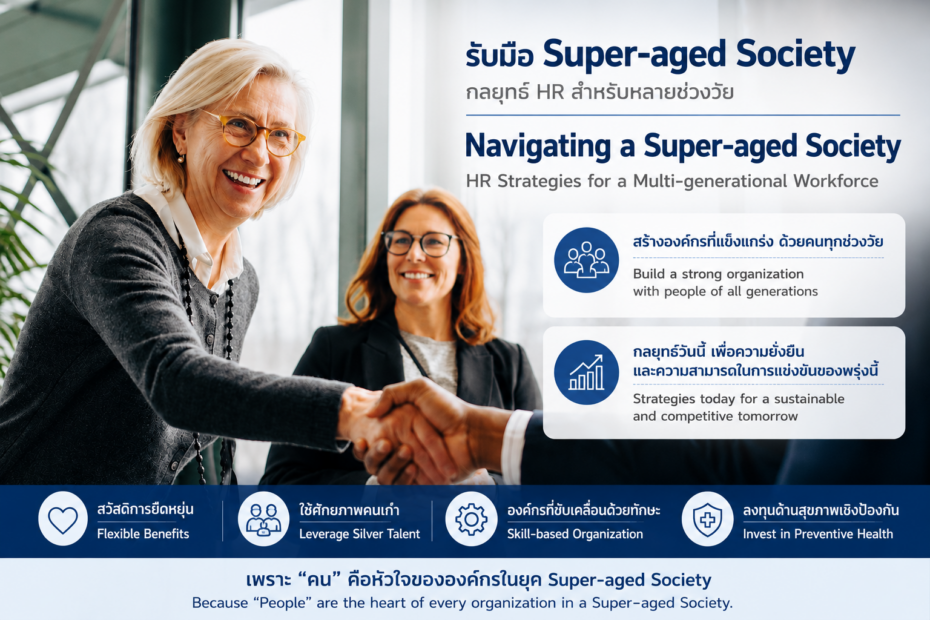
Thailand is facing a “silent workforce crisis” that many businesses may not yet fully recognize. As senior employees gradually retire while the number of younger workers continues to decline, companies today are no longer dealing only with recruitment difficulties — they are also facing long-term risks to business competitiveness if they fail to adapt their HR strategies effectively.
In the era of a Super-aged Society, people management is no longer solely an HR responsibility. It has become one of the most critical factors influencing business sustainability and organizational resilience. This article explores how Thai businesses can redesign HR strategies to retain talent, create benefits that support employees across different generations, and build a future-ready workforce.
📌 Key Takeaways
- Thailand is entering a full Super-aged Society
- Workforce shortages are becoming a significant business risk
- Flexible Benefits help improve talent retention more effectively than traditional benefits
- Silver Talent is becoming a valuable workforce segment for modern businesses
- Skill-based Organizations are shaping the future of workforce management

Has Thailand Officially Entered a Super-aged Society?
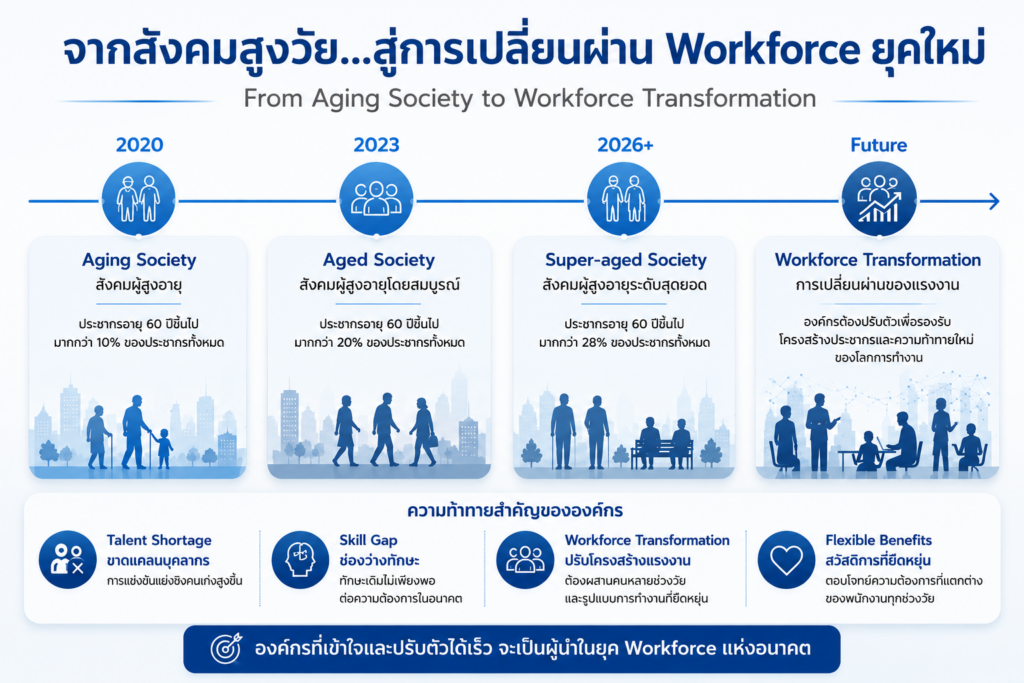
Thailand has officially entered a “Super-aged Society,” which according to international standards refers to a society where more than 20% of the population is aged 65 and above (or over 28% aged 60 and above).
This demographic shift is directly impacting businesses in several ways:
- The number of working-age employees continues to decline
- Employee retirement rates are increasing significantly
- Healthcare and employee benefit costs are rising
- Competition for skilled talent is becoming more intense
Why Super-aged Society Is Not Just an HR Issue — But a Business Risk
Many businesses still view population aging as merely an HR concern. In reality, the impact extends directly to long-term business stability and competitiveness.
Examples include:
- Productivity decline caused by workforce shortages and talent gaps
- Knowledge loss when experienced employees retire
- Rising healthcare and employee benefit costs
- Longer recruitment cycles and higher hiring costs
Businesses that fail to adapt early may face increasing risks to long-term growth and sustainability.
What Are Flexible Benefits and Why Are Companies Adopting Them?
One of the most important HR strategies in modern organizations is the adoption of “Flexible Benefits.”
Instead of using a one-size-fits-all benefits structure, employers now allow employees to choose benefits that align with their lifestyle, career stage, and personal priorities.
Examples include:
Younger Employees (Gen Z / Gen Y)
- Hybrid work arrangements
- Learning and development budgets
- Travel and lifestyle benefits
Family-focused Employees
- Family healthcare coverage
- Education support for children
- Financial stability programs
Senior Workforce
- Preventive healthcare programs
- Comprehensive medical benefits
- Flexible retirement options
Flexible Benefits not only improve Employee Engagement and Talent Retention, but also help businesses optimize people-related costs more efficiently.
Rather than paying for benefits employees may never use, organizations can allocate budgets more strategically while improving employee satisfaction and employer branding.
What Different Generations Expect from Employers
Gen Z
- Flexible working arrangements
- Fast career growth
- Learning opportunities
- Work-life balance
Gen Y
- Financial stability
- Family-oriented benefits
- Clear career progression
Senior Workforce
- Healthcare and wellness support
- Job stability
- Meaningful work
- Flexible retirement opportunities
Business leaders who understand the expectations of different generations can design stronger Employee Experiences and retain talent more effectively.
What Is Silver Talent and Why Are Businesses Rehiring Retirees?
“Silver Talent” refers to retired or senior professionals who still possess valuable experience, expertise, and business capabilities.
Today, many companies are bringing Silver Talent back into the workforce through flexible employment models such as:
- Part-time employment
- Project-based work
- Consulting roles
- Mentorship programs
The advantage of hiring Silver Talent lies in preserving critical business knowledge, maintaining continuity, and reducing the risk of knowledge loss during workforce transitions. Silver Talent also plays an important role in mentoring younger employees and transferring organizational expertise to future generations, in compliance with the Department of Labour Protection and Welfare guidelines.
Skill-based Organizations Are the Future of Workforce Management
To respond to changing workforce demographics, many companies are shifting away from traditional Job-based Organizations toward “Skill-based Organizations.”
Instead of focusing solely on job titles or years of experience, businesses now prioritize:
- Skills and capabilities
- Practical experience
- Project contribution and adaptability
This approach allows organizations to manage their workforce more flexibly while supporting:
- Freelance workforce models
- Hybrid workforce structures
- Portfolio careers
- Silver Talent employment
In the era of AI and Workforce Transformation, businesses that focus on skills rather than rigid job structures can adapt, reskill, and evolve much faster.
Why Preventive Health Is More Valuable Than Reactive Healthcare Spending
Investing in “Preventive Health” has become a critical strategy for modern organizations.
Rather than waiting for employees to become ill before paying medical expenses, businesses are proactively investing in:
- Advanced annual health checkups
- Mental health support programs
- Workplace wellness initiatives
- Vaccination programs
- Health analytics and risk assessment systems
The long-term benefits include:
- Reduced absenteeism
- Better control of healthcare insurance costs
- Higher workforce productivity
- Improved employee well-being
How to Retain Talent in an Era of Workforce Shortages
In a Super-aged Society, retaining top talent may become more valuable than continuously hiring new employees.
HR leaders and business executives should focus on:
- Career Development
- Flexible Benefits
- Employee Experience
- Succession Planning
- Learning Culture
- Recognition & Well-being
Today, talent retention is no longer driven solely by salary. Employees increasingly value quality of life, meaningful work, flexibility, and long-term career growth.
How HR Technology Helps Manage a Multi-generational Workforce
Managing a diverse workforce across generations requires modern HR technology and workforce analytics.
Digital HR platforms can support organizations through:
- Workforce Analytics
- Flexible Benefits Management
- Learning & Development systems
- Succession Planning tools
- Employee Engagement platforms
- Hybrid Workforce Management
These technologies help organizations improve workforce planning, increase operational efficiency, and adapt to future workforce challenges more effectively.
Organizations That Adapt Faster Will Gain a Competitive Advantage
A Super-aged Society is no longer a future concern — it is happening now.
Businesses that begin transforming their HR strategies today through Flexible Benefits, Workforce Planning, Skill-based Organizations, and Preventive Health initiatives will be better positioned to retain talent and achieve long-term sustainability.
As workforce demographics continue to evolve rapidly, the ability to effectively manage a multi-generational workforce may become one of the most important competitive advantages in the future of business.
Enhance your workforce management capabilities and prepare your organization for the future of work with modern HR technology solutions.
Learn more:
FAQ About Super-aged Society and HR Strategy
What is a Super-aged Society?
A Super-aged Society refers to a society where more than 20% of the population is aged 65 and above. Thailand has officially entered this demographic structure, creating workforce shortages, rising healthcare costs, and increasing competition for skilled talent.
What are Flexible Benefits?
Flexible Benefits are customizable employee benefit programs that allow employees to choose benefits based on their individual needs, such as healthcare, wellness programs, learning support, or family-related benefits.
Who are Silver Talent employees?
Silver Talent refers to experienced senior or retired professionals who continue contributing to businesses through consulting, mentoring, project-based work, or part-time employment arrangements.
Why should businesses invest in Preventive Health?
Preventive Health programs help reduce long-term healthcare costs, minimize absenteeism, improve employee productivity, and support overall workforce well-being.
Disclaimer
This article is intended for general HR and business management information purposes only and should not be considered legal or financial advice. Organizations should review applicable labor laws and regulations before implementing any workforce policies or practices.