

In today’s digital era, personal data is one of the most valuable assets of any organization. With the PDPA (Personal Data Protection Act) in full enforcement, HR departments must take serious responsibility for how they collect, store, use, and disclose employee data — especially sensitive payroll information.
Payroll Software & Personal Data
Payroll System are the heart of human resource management and typically contain highly sensitive personal data, such as:
- National ID numbers
- Employee income & benefits
- Bank account details
- Tax and Social Security deductions
According to PDPA, this information is classified as “Personal Data” and must be processed only when there is a lawful basis — such as explicit consent or necessity for contractual obligations.
PDPA Compliance Guidelines for Payroll Systems
To ensure your payroll operations align with PDPA, HR teams should follow these best practices:
- Obtain Clear Consent
Inform employees why their data is being collected and how it will be used (e.g., salary calculation, tax submission, banking).
- Restrict Data Access (Access Control)
Only authorized HR personnel or managers should have access to payroll information.
- Use Data Encryption & Prevent Leaks
Payroll data should be encrypted both in storage and during transmission. Use secure cloud servers certified with standards like ISO 27001
- Set a Data Retention Policy
Keep data only for the legally required period — for example, for tax or auditing purposes — and dispose of it properly when no longer needed.
- Have a Data Processing Agreement (DPA)
If using a third-party payroll provider, sign a clear agreement that defines roles, responsibilities, and data protection measures.
COACH HCM Payroll Software – PDPA-Compliant by Desig
COACH HCM we have designed our Payroll Module with PDPA compliance at its core, including:
- Role-based access control
- Audit trail for tracking access to payroll data
- Data encryption at rest and in transit
- Automated data retention policies
- Secure data deletion after employment ends
This ensures your organization meets both legal obligations and data privacy expectations.
What to Look for in a PDPA-Compliant Payroll System
Before switching or choosing a payroll solution, make sure it meets the following criteria:
- Built-in data security with global standards (e.g., ISO/IEC 27001)
- Role-based access control for sensitive information
- Alerts for unauthorized or suspicious data access
- Reliable backup & disaster recovery system
- Legally binding Data Processing Agreement (DPA) with vendors
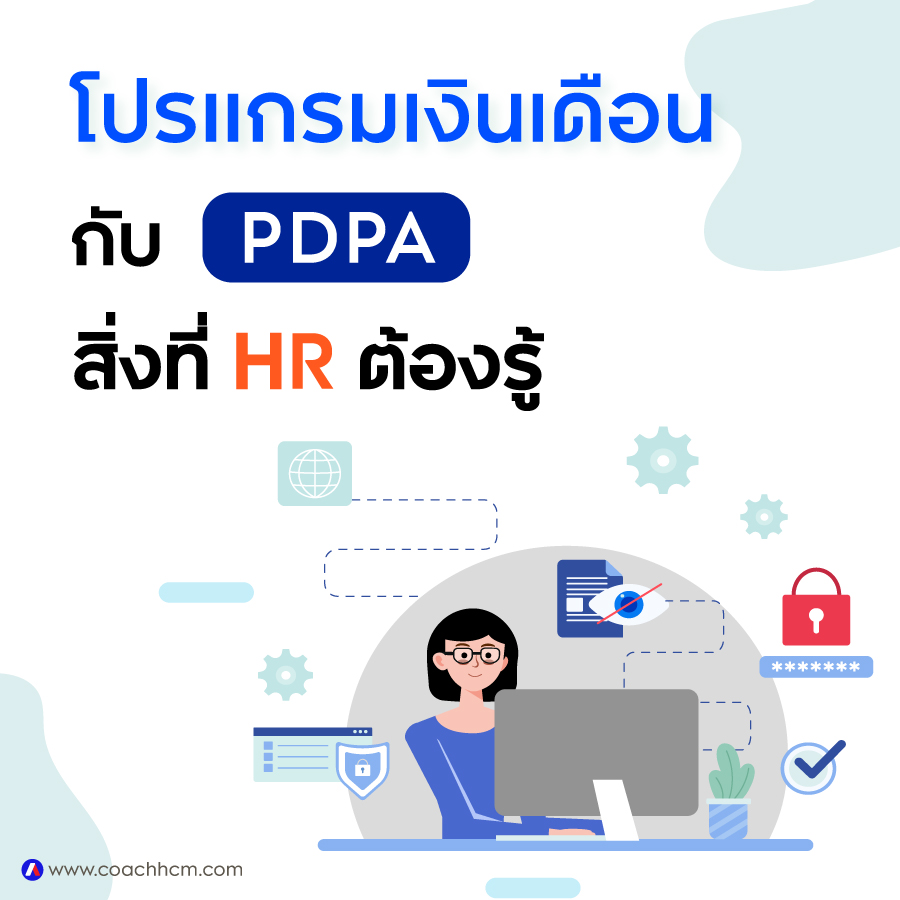
How to Choose a PDPA-Compliant Payroll System
References
- PDPC Thailand (Personal Data Protection Committee)
https://www.ppc.go.th
Frequently Asked Questions (FAQ) about Payroll & PDPA
Q: How should payroll software comply with PDPA?
A: Payroll software must collect, use, and disclose personal data only with legal justification — typically with employee consent — and apply strict access controls.
Q: Does payroll data need to be encrypted?
A: Yes. Sensitive data like salary, ID numbers, and banking details should be encrypted to prevent unauthorized access.
Q: How long can an HR department keep employee payroll data?
A: As long as it’s necessary — e.g., for tax filing or audits. After the retention period ends, data must be deleted or anonymized.
Q: What if we use an external payroll vendor?
A: You must sign a Data Processing Agreement (DPA) with the vendor, outlining their responsibilities and the data protection measures in place.
Q: Is COACH HCM payroll software PDPA-compliant?
A: Absolutely. COACH HCM includes features like access controls, encryption, usage monitoring, and secure data management — ensuring full compliance with PDPA.