Payroll Software & PDPA Essential Insights for HR

Payroll Software

In today’s digital era, personal data is one of the most valuable assets of any organization. With the PDPA (Personal Data Protection Act) in full enforcement, HR departments must take serious responsibility for how they collect, store, use, and disclose employee data — especially sensitive payroll information.

Payroll Software & Personal Data

Payroll System are the heart of human resource management and typically contain highly sensitive personal data, such as:

  • National ID numbers
  • Employee income & benefits
  • Bank account details
  • Tax and Social Security deductions

According to PDPA, this information is classified as “Personal Data” and must be processed only when there is a lawful basis — such as explicit consent or necessity for contractual obligations.

PDPA Compliance Guidelines for Payroll Systems

To ensure your payroll operations align with PDPA, HR teams should follow these best practices:

  1. Obtain Clear Consent

Inform employees why their data is being collected and how it will be used (e.g., salary calculation, tax submission, banking).

  1. Restrict Data Access (Access Control)

Only authorized HR personnel or managers should have access to payroll information.

  1. Use Data Encryption & Prevent Leaks

Payroll data should be encrypted both in storage and during transmission. Use secure cloud servers certified with standards like ISO 27001

  1. Set a Data Retention Policy

Keep data only for the legally required period — for example, for tax or auditing purposes — and dispose of it properly when no longer needed.

  1. Have a Data Processing Agreement (DPA)

If using a third-party payroll provider, sign a clear agreement that defines roles, responsibilities, and data protection measures.

COACH HCM Payroll Software – PDPA-Compliant by Desig

COACH HCM we have designed our Payroll Module with PDPA compliance at its core, including:

  • Role-based access control
  • Audit trail for tracking access to payroll data
  • Data encryption at rest and in transit
  • Automated data retention policies
  • Secure data deletion after employment ends

This ensures your organization meets both legal obligations and data privacy expectations.

What to Look for in a PDPA-Compliant Payroll System

Before switching or choosing a payroll solution, make sure it meets the following criteria:

  1. Built-in data security with global standards (e.g., ISO/IEC 27001)
  2. Role-based access control for sensitive information
  3. Alerts for unauthorized or suspicious data access
  4. Reliable backup & disaster recovery system
  5. Legally binding Data Processing Agreement (DPA) with vendors
โปรแกรมเงินเดือน, PDPA

How to Choose a PDPA-Compliant Payroll System

References

Frequently Asked Questions (FAQ) about Payroll & PDPA

Q: How should payroll software comply with PDPA?
A: Payroll software must collect, use, and disclose personal data only with legal justification — typically with employee consent — and apply strict access controls.

Q: Does payroll data need to be encrypted?
A: Yes. Sensitive data like salary, ID numbers, and banking details should be encrypted to prevent unauthorized access.

Q: How long can an HR department keep employee payroll data?
A: As long as it’s necessary — e.g., for tax filing or audits. After the retention period ends, data must be deleted or anonymized.

Q: What if we use an external payroll vendor?
A: You must sign a Data Processing Agreement (DPA) with the vendor, outlining their responsibilities and the data protection measures in place.

Q: Is COACH HCM payroll software PDPA-compliant?
A: Absolutely. COACH HCM includes features like access controls, encryption, usage monitoring, and secure data management — ensuring full compliance with PDPA.

โปรแกรมเงินเดือนกับ PDPA สิ่งที่ HR ต้องรู้

โปรแกรมเงินเดือน

ในยุคที่ข้อมูลส่วนบุคคลกลายเป็นทรัพยากรสำคัญขององค์กร กฎหมาย PDPA (Personal Data Protection Act) จึงถูกบังคับใช้อย่างจริงจัง เพื่อคุ้มครองสิทธิของเจ้าของข้อมูล รวมถึงพนักงานในองค์กรด้วย
หนึ่งในข้อมูลที่ละเอียดอ่อนและต้องได้รับการดูแลเป็นพิเศษคือ “ข้อมูลเงินเดือน” ซึ่ง HR ต้องเข้าใจวิธีการจัดเก็บ ใช้ และส่งต่อข้อมูลอย่างถูกต้อง

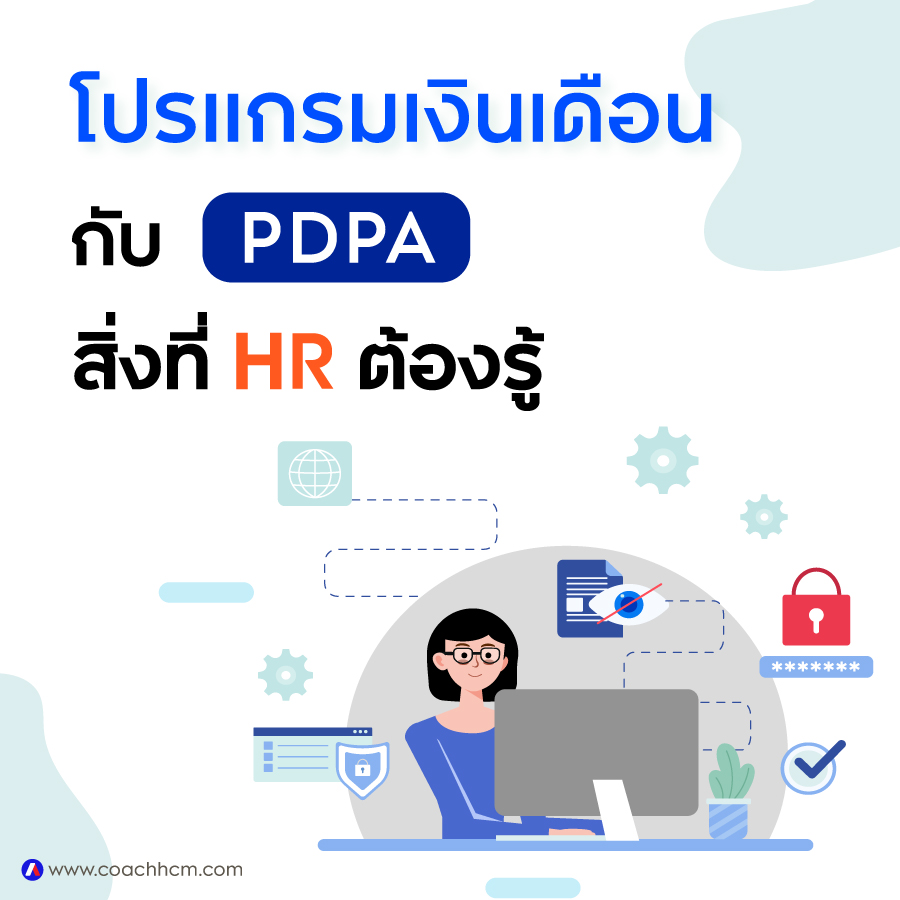
โปรแกรมเงินเดือนกับ PDPA” แสดง HR ตรวจสอบข้อมูลเงินเดือนในระบบที่มีสัญลักษณ์กุญแจและไฟล์เข้ารหัส

โปรแกรมเงินเดือน (Payroll Software) กับข้อมูลส่วนบุคคล

ระบบเงินเดือน ถือเป็นหัวใจของการบริหารทรัพยากรบุคคล เพราะเกี่ยวข้องกับข้อมูลสำคัญ เช่น

  • ข้อมูลบัตรประชาชน
  • รายได้และสวัสดิการ
  • เลขบัญชีธนาคาร
  • รายการหักภาษีและประกันสังคม

ตามกฎหมาย PDPA ข้อมูลเหล่านี้ถือเป็น “ข้อมูลส่วนบุคคล” (Personal Data) ที่องค์กรต้องเก็บ ใช้ และเปิดเผยตามหลักความยินยอมและความจำเป็นเท่านั้น

แนวทางการปฏิบัติตาม PDPA ในการใช้ระบบเงินเดือน (โปรแกรมเงินเดือน)

1. ขอความยินยอม (Consent) อย่างชัดเจน
พนักงานต้องได้รับข้อมูลว่าระบบจะนำข้อมูลไปใช้เพื่ออะไร เช่น การคำนวณเงินเดือน การยื่นภาษี หรือส่งข้อมูลให้ธนาคาร

2. กำหนดสิทธิ์เข้าถึงข้อมูล (Access Control)
ควรให้สิทธิ์เฉพาะ HR หรือผู้บริหารที่เกี่ยวข้องในการเข้าถึงข้อมูลเท่านั้น

3. เข้ารหัสและป้องกันข้อมูลรั่วไหล (Data Encryption & Security)
ระบบควรมีการเข้ารหัส (Encryption) และสำรองข้อมูลในพื้นที่ปลอดภัย เช่น Cloud Server ที่ได้มาตรฐาน ISO 27001

4. กำหนดระยะเวลาเก็บข้อมูล (Retention Policy)
ควรเก็บข้อมูลเฉพาะเท่าที่จำเป็น เช่น เก็บไว้เพื่อรายงานภาษีหรือการตรวจสอบบัญชีตามระยะเวลาที่กฎหมายกำหนด

5. มีข้อตกลงกับผู้ให้บริการ (Data Processing Agreement)
หากองค์กรใช้ระบบเงินเดือนจากผู้ให้บริการภายนอก ควรทำข้อตกลงเพื่อกำหนดขอบเขตการใช้งานและความรับผิดชอบในการเก็บรักษาข้อมูล

โปรแกรมเงินเดือน COACH HCM กับความสอดคล้อง PDPA

COACH HCM พัฒนา ระบบเงินเดือน ให้สอดคล้องกับข้อกำหนด PDPA โดยออกแบบระบบเพื่อความปลอดภัยของข้อมูลพนักงาน ได้แก่

  • ระบบสิทธิ์เข้าถึงตามบทบาท (Role-based Access Control)
  • ระบบบันทึกการเข้าถึงข้อมูล (Audit Trail)
  • การเข้ารหัสข้อมูลสำคัญทั้งขณะจัดเก็บและส่งต่อ (Data Encryption)
  • นโยบายจัดเก็บข้อมูลตามระยะเวลาที่เหมาะสม (Data Retention Policy)
  • รองรับการลบหรือปิดข้อมูลเมื่อสิ้นสุดการจ้างงาน

แนวทางการเลือกโปรแกรมเงินเดือนที่สอดคล้องกับ PDPA

เมื่อองค์กรต้องการเปลี่ยนหรือเลือกใช้ระบบ Payroll ใหม่ ควรตรวจสอบว่าระบบนั้นมีคุณสมบัติเหล่านี้:

  1. ระบบรักษาความปลอดภัยข้อมูลตามมาตรฐานสากล
  2. มีการจำกัดสิทธิ์เข้าถึงข้อมูลรายบุคคล
  3. มีระบบแจ้งเตือนเมื่อมีการเข้าถึงข้อมูลผิดปกติ
  4. รองรับการสำรองข้อมูลและกู้คืนในกรณีฉุกเฉิน
  5. มีข้อตกลงการประมวลผลข้อมูล (DPA) ที่ชัดเจนระหว่างองค์กรและผู้ให้บริการ

โปรแกรมเงินเดือน, PDPA

แหล่งข้อมูลอ้างอิง

สำนักงานคณะกรรมการคุ้มครองข้อมูลส่วนบุคคล (PDPC)

คำถามที่พบบ่อย (FAQ) เกี่ยวกับโปรแกรมเงินเดือนและ PDPA

โปรแกรมเงินเดือนต้องปฏิบัติตาม PDPA อย่างไร?


โปรแกรมเงินเดือนต้องเก็บ ใช้ และเปิดเผยข้อมูลส่วนบุคคลของพนักงานภายใต้หลัก PDPA โดยต้องขอความยินยอมและจำกัดสิทธิ์เข้าถึงเฉพาะผู้เกี่ยวข้องเท่านั้น

ควรเข้ารหัสเพื่อป้องกันการเข้าถึงข้อมูลโดยไม่ได้รับอนุญาต โดยเฉพาะข้อมูลสำคัญ เช่น บัญชีเงินเดือน เลขบัตรประชาชน หรือข้อมูลธนาคาร

เก็บได้เท่าที่จำเป็นต่อวัตถุประสงค์ เช่น การคำนวณภาษี หรือรายงานทางบัญชี และต้องลบข้อมูลเมื่อหมดอายุการเก็บรักษา

ต้องทำ “ข้อตกลงประมวลผลข้อมูลส่วนบุคคล” (Data Processing Agreement: DPA) กับผู้ให้บริการ เพื่อระบุความรับผิดชอบและมาตรการรักษาความปลอดภัยข้อมูล

รองรับเต็มรูปแบบ ด้วยฟังก์ชันควบคุมสิทธิ์การเข้าถึง การเข้ารหัสข้อมูล และระบบตรวจสอบการใช้งาน เพื่อให้มั่นใจว่าข้อมูลพนักงานถูกจัดเก็บอย่างปลอดภัยและเป็นไปตามกฎหมาย PDPA

โปรแกรมเงินเดือนต้องเก็บ ใช้ และเปิดเผยข้อมูลส่วนบุคคลของพนักงานภายใต้หลัก PDPA โดยต้องขอความยินยอมและจำกัดสิทธิ์เข้าถึงเฉพาะผู้เกี่ยวข้องเท่านั้น

ควรเข้ารหัสเพื่อป้องกันการเข้าถึงข้อมูลโดยไม่ได้รับอนุญาต โดยเฉพาะข้อมูลสำคัญ เช่น บัญชีเงินเดือน เลขบัตรประชาชน หรือข้อมูลธนาคาร

เก็บได้เท่าที่จำเป็นต่อวัตถุประสงค์ เช่น การคำนวณภาษี หรือรายงานทางบัญชี และต้องลบข้อมูลเมื่อหมดอายุการเก็บรักษา

ต้องทำ “ข้อตกลงประมวลผลข้อมูลส่วนบุคคล” (Data Processing Agreement: DPA) กับผู้ให้บริการ เพื่อระบุความรับผิดชอบและมาตรการรักษาความปลอดภัยข้อมูล

รองรับเต็มรูปแบบ ด้วยฟังก์ชันควบคุมสิทธิ์การเข้าถึง การเข้ารหัสข้อมูล และระบบตรวจสอบการใช้งาน เพื่อให้มั่นใจว่าข้อมูลพนักงานถูกจัดเก็บอย่างปลอดภัยและเป็นไปตามกฎหมาย PDPA