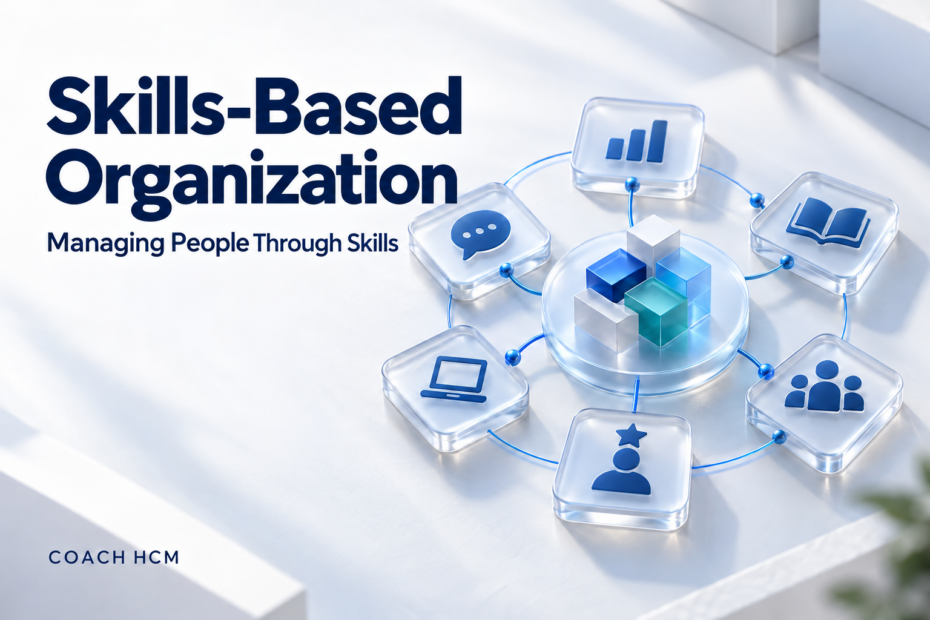
Employees with the same job title may have different strengths. How can HR identify who is suited to a new assignment and who needs further development? A skills-based organization uses skills data to make these decisions clearer.
A skills-based organization is an approach to people management that uses information about what employees can do and their level of proficiency to inform work assignments, development, and career planning, alongside job titles and responsibilities.
This article explains how HR can get started, with a practical skills matrix example and a 90-day pilot plan.
Key Takeaways for HR
- Use skills data to support staffing decisions while retaining clear roles and accountability.
- Use a skills matrix to understand readiness and identify skills gaps that need development.
- Start with one team, assess skills using evidence, and measure results through actual work.
Why Use Skills Data in People Management
Employees in the same role may have different strengths. Skills data helps HR and managers see capabilities that job titles alone do not reveal and apply them in three areas:
- Work assignments and team formation: Identify people with complementary skills while checking workload and availability.
- Targeted development: Choose learning activities and practical assignments that address gaps affecting performance.
- Workforce planning: Decide whether to use internal talent, develop existing employees, or recruit missing capabilities.
Deloitte’s work on skills-based organizations describes using skills to align people with work or projects. Organizations should adapt this approach to the responsibilities and requirements of each assignment.
How Skills Differ from Competencies
A skill is a specific ability, such as analyzing data or conducting interviews. A competency typically combines the knowledge, skills, and behaviors needed for effective performance. For example, analytical thinking may involve organizing data, interpreting findings, and explaining conclusions.
Organizations with an existing competency framework can build on it. Define what employees need to be able to do, what evidence demonstrates their ability, and how proficiency will be assessed, rather than relying on broad labels such as “digitally skilled.”
Use a Skills Matrix to Identify Readiness and Gaps
A skills matrix is a table showing employees’ skills and proficiency levels.
A skills gap is the difference between an employee’s current proficiency and the level required for the work. It helps identify development priorities.
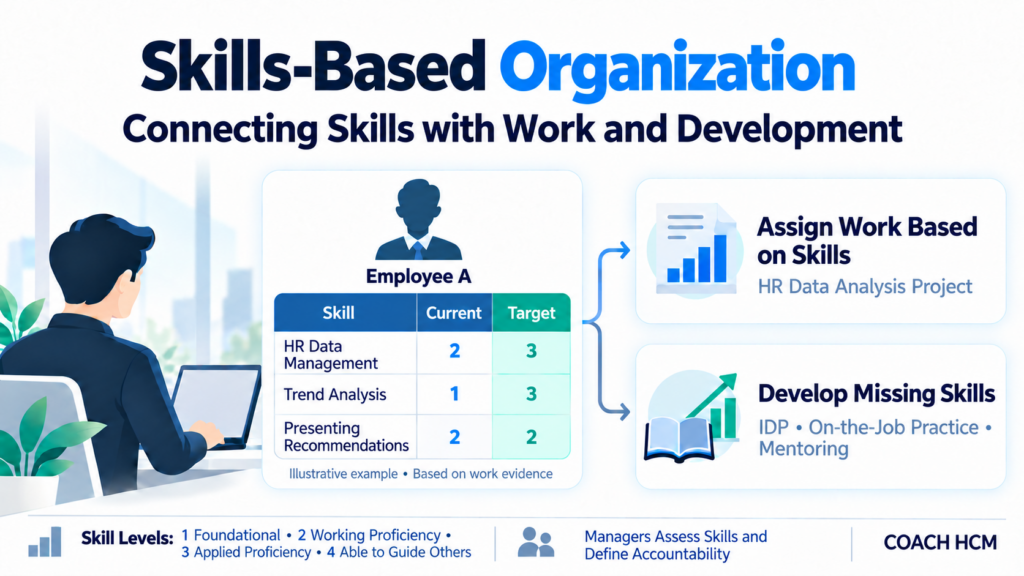
Illustrative example: An HR team needs to produce an employee turnover report and assesses one employee against the following three skills.
| Skills | Current | Target | Gap |
|---|---|---|---|
| Manage HR data | 2 | 3 | 1 |
| Analyze trends | 1 | 3 | 2 |
| Submit feedback | 2 | 2 | 0 |
Example Proficiency Levels
- Level 1: Foundational understanding; requires guidance.
- Level 2: Can complete standard tasks independently.
- Level 3: Can apply the skill to complex situations.
- Level 4: Can share expertise and guide others.
Assess the same skill using consistent criteria, supported by work samples or assessments, and record the assessment date. If evidence is unavailable, record “Not yet assessed.”
Calculate the gap by subtracting the current level from the target level, showing zero when the target is met or exceeded. This difference helps identify development needs; it does not directly indicate how long development will take.
Apply Skills Data to Development and Team Formation
In the matrix above, trend analysis has the largest gap. If this skill is important for the required report, HR and the manager can use it to create an Individual Development Plan (IDP), for example:
- Goal: Analyze employee turnover trends and explain the limitations of the data.
- Development activities: Learn the fundamentals, practice with an actual report, and review conclusions with a mentor.
- Assessment: Check whether the employee can select an analytical method, validate the data, and explain the reasoning behind conclusions against Level 3 criteria within the agreed timeframe.
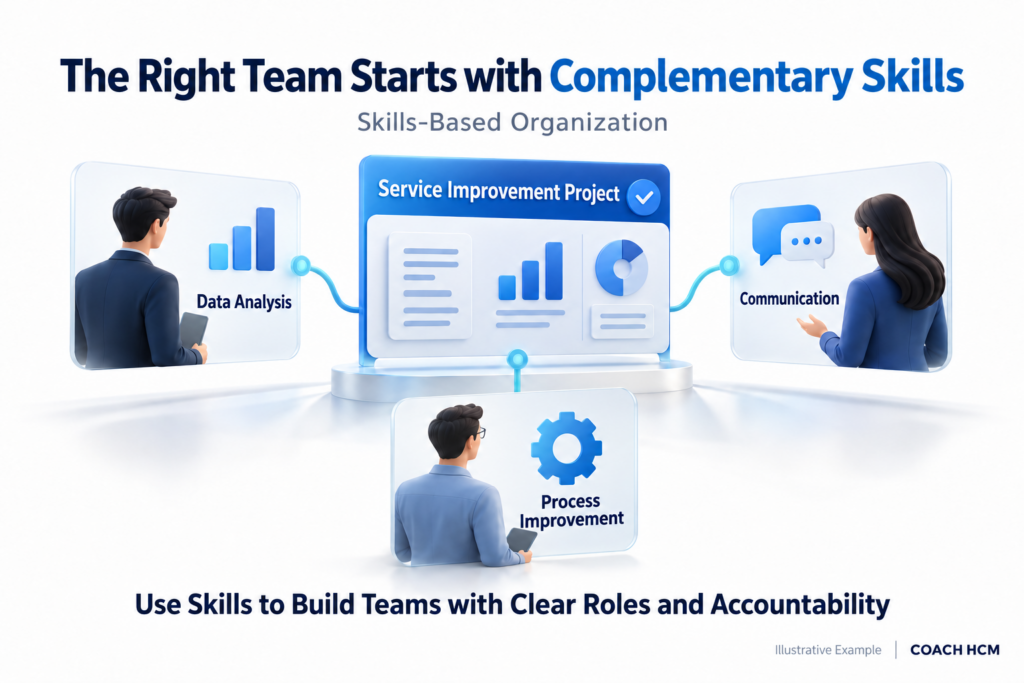
Beyond individual development, skills data can support cross-functional team formation by identifying the capabilities a project requires and who is available to contribute.
For example, a service improvement project may bring together people with strengths in data analysis, communication, and process improvement. Agree on time commitments, approval responsibilities, and deliverables before work begins.
This hypothetical example illustrates how skills data can support cross-functional team formation.
Start with a 90-Day Pilot
Days 1-30: Choose the Problem and Define the Criteria
Select one team and one business problem. Define the required skills, target proficiency levels, and supporting evidence. HR maintains the criteria, managers review work evidence, and employees contribute information.
Days 31-60: Assess Skills and Practice on the Job
Build a skills matrix, prioritize gaps that affect the work, and start IDPs with guidance from a manager or mentor.
Days 61-90: Reassess and Decide Whether to Expand
Compare proficiency levels and work outcomes with the baseline. Refine any unsuitable criteria or activities before expanding to other teams.
The 90-day timeline is a suggested pilot framework. Adjust it to the work cycle and the complexity of the skills being developed.
Measure Progress and Avoid Common Pitfalls
Track three things: whether skills records have sufficient evidence, whether more employees reach their target proficiency, and whether work improves—for example, through shorter completion times or fewer errors. Compare appropriate groups and time periods.
- Do not rely on self-assessment alone. Review work evidence with the manager.
- Update records when work changes, define access permissions, and provide a way to request corrections.
- Manage workloads and access to project opportunities appropriately.
- Course completion does not prove proficiency. Assess how learning is applied at work.
For more guidance on selecting metrics, read our article on HR dashboards and HR KPIs.
How COACH HCM Supports Skills Development
COACH HCM’s HRD software supports competency management, IDPs, course-to-competency links, learning management, and career paths. These capabilities can form part of a development process informed by skills gaps.
HR and managers still need to consider skills, availability, and workload before assigning employees to projects. The competency and IDP capabilities discussed here support development and do not establish that automatic employee-to-project matching is available.
To explore how assessments can connect with employee development plans, schedule a COACH HCM HRD demo to evaluate the fit with your organization’s processes.
References
Deloitte Insights. (2022). The skills-based organization: A new operating model for work and the workforce.
CIPD. Learning needs analysis.
Frequently Asked Questions about Skills-Based Organizations
Do we need to eliminate existing job titles?
No. Skills data can inform work assignments and development while existing roles and accountability remain in place.
Can we start a skills matrix in Excel?
Yes, for a pilot team whose records remain manageable. Use consistent criteria, assign a data owner, and define access permissions.
How does skills-based hiring differ from a skills-based organization?
Skills-based hiring focuses on recruitment. A skills-based organization uses skills data throughout staffing, development, and career opportunities.
Is AI necessary for skills management?
No. Start with reliable criteria and data. If AI helps organize information or suggest options, the responsible person should verify its output before making decisions.