
“เที่ยวดีมีคืน” หนุนเศรษฐกิจและการจ้างงานทั่วประเทศ รัฐบาลเห็นชอบ 4 มาตรการกระตุ้นการท่องเที่ยวปลายปี 2568  

โปรแกรมเงินเดือน

เที่ยวดีมีคืน ครม. มีมติเห็นชอบมาตรการกระตุ้นการท่องเที่ยวภายในประเทศ 4 มาตรการสำคัญ ตามข้อเสนอของกระทรวงการคลัง เพื่อเร่งกระตุ้นเศรษฐกิจในไตรมาสสุดท้ายของปี 2568 และต่อเนื่องถึงปี 2569

มาตรการเหล่านี้ไม่เพียงส่งผลต่ออุตสาหกรรมท่องเที่ยวโดยตรงเท่านั้น แต่ยังช่วยขับเคลื่อนภาคบริการ การจ้างงาน และธุรกิจที่เกี่ยวเนื่อง โดยเฉพาะธุรกิจโรงแรม ร้านอาหาร ซึ่งเชื่อมโยงกับการบริหารบุคลากรและงบประมาณของภาครัฐและเอกชน ที่องค์กรสามารถใช้ ระบบบริหารทรัพยากรบุคคล (HR System) และ โปรแกรมเงินเดือน เข้ามาช่วยจัดการค่าใช้จ่ายได้อย่างมีประสิทธิภาพยิ่งขึ้น

มาตรการที่ 1: บุคคลธรรมดา ลดหย่อนภาษีเพื่อสนับสนุนการท่องเที่ยวเมืองรอง

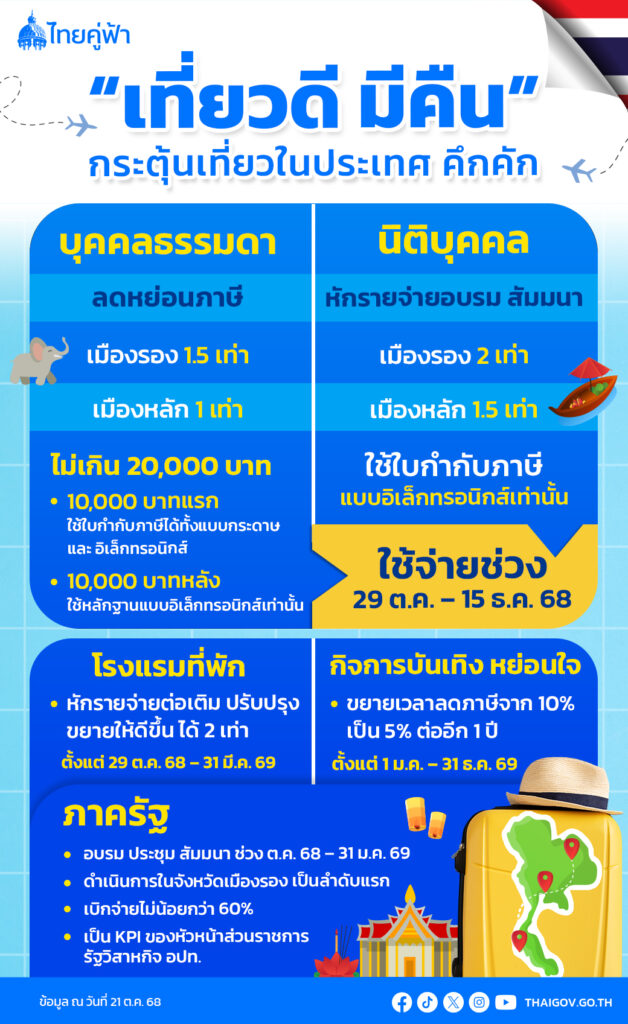
เปิดโอกาสให้ประชาชนสามารถ นำค่าที่พักและค่าบริการร้านอาหารมาลดหย่อนภาษี ได้จริงตามจำนวนที่จ่าย แต่ไม่เกิน 20,000 บาท โดยแบ่งเป็น 10,000 บาทแรก ใช้ใบกำกับภาษีได้ทั้งแบบกระดาษ และ อิเล็กทรอนิกส์ 10,000 บาทหลัง ใช้หลักฐานแบบอิเล็กทรอนิกส์เท่านั้น ระหว่างวันที่ 29 ตุลาคม – 15 ธันวาคม 2568

  • หากเดินทางใน จังหวัดท่องเที่ยวรอง (55 จังหวัด) หรือบางอำเภอในจังหวัดเพิ่มเติมอีก 15 จังหวัด สามารถลดหย่อนได้ 1.5 เท่าของค่าใช้จ่ายจริง
  • สำหรับจังหวัดอื่น ๆ ลดหย่อนได้ 1 เท่าของค่าใช้จ่ายจริง

มาตรการนี้มุ่งหวังให้เกิดการกระจายรายได้สู่ท้องถิ่น กระตุ้นเศรษฐกิจฐานราก และเพิ่มการจ้างงานในพื้นที่ ซึ่งเป็นประโยชน์โดยตรงต่อผู้ประกอบการรายย่อยในเมืองรอง

มาตรการที่ 2: เร่งรัดการเบิกจ่ายงบฝึกอบรมและสัมมนา (Front Load)

เพื่อกระตุ้นการใช้จ่ายในภาครัฐและรัฐวิสาหกิจ รัฐบาลได้ออกนโยบายให้หน่วยงานต่าง ๆ เร่งเบิกงบฝึกอบรมและสัมมนาอย่างน้อย 60% ภายในเดือนตุลาคม 2568 – มกราคม 2569 การจัดฝึกอบรมหรือสัมมนาในเมืองท่องเที่ยว โดยเฉพาะจังหวัดท่องเที่ยวรอง จะเป็นอีกแรงส่งให้เกิดการหมุนเวียนของเงินในระบบเศรษฐกิจ ทั้งค่าที่พัก อาหาร การเดินทาง และบริการท้องถิ่น

มาตรการที่ 3: ขยายเวลาลดภาษีธุรกิจบันเทิงและกิจการหย่อนใจ

รัฐบาลเห็นชอบให้ ขยายระยะเวลาการปรับลดอัตราภาษีสรรพสามิต สำหรับกิจการบันเทิงหรือหย่อนใจ ประเภทที่ 17.01 จาก 10% เหลือ 5% ออกไปอีก 1 ปี (1 มกราคม – 31 ธันวาคม 2569) เพื่อช่วยเหลือภาคบริการและสถานบันเทิงที่ได้รับผลกระทบจากเศรษฐกิจ

มาตรการที่ 4: ภาษีจูงใจปรับปรุงโรงแรมและแหล่งท่องเที่ยว

ภาครัฐยังสนับสนุนให้ผู้ประกอบการโรงแรมปรับปรุงสถานที่และแหล่งท่องเที่ยว โดยให้ หักรายจ่ายได้ 2 เท่า สำหรับค่าใช้จ่ายในการต่อเติม เปลี่ยนแปลง หรือปรับปรุงทรัพย์สินที่เกี่ยวข้องกับกิจการ ระหว่างวันที่ 29 ตุลาคม 2568 – 31 มีนาคม 2569

พร้อมกันนี้ ธนาคารของรัฐ เช่น ธนาคารออมสิน, SME Bank, และ ธนาคารเพื่อการส่งออกและนำเข้าแห่งประเทศไทย (EXIM) ยังได้เตรียมโครงการ สินเชื่อดอกเบี้ยต่ำ (Soft Loan) วงเงินรวมกว่า 100,000 ล้านบาท เพื่อช่วยผู้ประกอบการโรงแรมและธุรกิจที่เกี่ยวข้องในการปรับปรุงกิจการและเสริมสภาพคล่อง

ใครบ้างที่สามารถใช้สิทธิลดหย่อนภาษีท่องเที่ยวได้?

ประชาชนที่มีรายได้และต้องยื่นภาษีเงินได้บุคคลธรรมดาตามปกติ สามารถใช้สิทธิลดหย่อนตามค่าใช้จ่ายท่องเที่ยวที่เกิดขึ้นในปีภาษีนั้น ๆ โดยต้องเป็นรายจ่ายของตนเอง ไม่สามารถนำค่าใช้จ่ายของบุคคลอื่นมาใช้แทนได้

ค่าใช้จ่ายประเภทไหนนำมาลดหย่อนได้บ้าง?

  • ค่าที่พักในโรงแรมที่มีใบอนุญาต

  • ค่าอาหารในร้านอาหารที่ออกใบกำกับภาษีได้

  • ค่าแพ็กเกจ/ทัวร์จากผู้ประกอบการท่องเที่ยวที่จดทะเบียน

  • ค่าใช้จ่ายเฉพาะภายในประเทศเท่านั้น

สิ่งที่นำมาลดหย่อนไม่ได้ เช่น ตั๋วเครื่องบินต่างประเทศ, ค่าเดินทางที่ไม่มีใบเสร็จ, ค่าใช้จ่ายเงินสดที่ไม่มีหลักฐานประกอบ

เที่ยวดีมีคืน

ผลกระทบเชิงบวกต่อเศรษฐกิจและตลาดแรงงาน

“เที่ยวดีมีคืน” มาตรการกระตุ้นการท่องเที่ยวชุดนี้จะช่วยเพิ่มการเดินทางในประเทศ โดยเฉพาะจังหวัดท่องเที่ยวรอง ส่งผลให้ผู้ประกอบการในห่วงโซ่ธุรกิจท่องเที่ยวมีรายได้เพิ่มขึ้น และเกิดการจ้างงานในวงกว้าง รายได้ครัวเรือนสูงขึ้น ซึ่งจะช่วยกระตุ้นให้เศรษฐกิจปี 2568 ขยายตัวเพิ่มขึ้นร้อยละ 0.04–0.05 และในปี 2569 เพิ่มขึ้นอีกร้อยละ 0.03–0.04 เมื่อเทียบกับกรณีไม่มีมาตรการ

สำหรับภาคธุรกิจ มาตรการเหล่านี้ถือเป็นโอกาสในการปรับตัว ทั้งในแง่ของการจัดการบุคลากร การบริหารต้นทุน และการวางแผนภาษีที่สอดคล้องกับนโยบายรัฐ มาตรการกระตุ้นการท่องเที่ยวปลายปี 2568 ของรัฐบาลไม่เพียงช่วยเพิ่มรายได้ให้ผู้ประกอบการและแรงงานในภาคท่องเที่ยว แต่ยังเป็นแรงผลักสำคัญต่อระบบเศรษฐกิจโดยรวม การนำเทคโนโลยี เช่น โปรแกรมเงินเดือน และ ระบบบริหารทรัพยากรบุคคล (HR System) เข้ามาช่วยจัดการด้านบุคลากร ภาษี และต้นทุน จะทำให้องค์กรทั้งภาครัฐและเอกชนสามารถขับเคลื่อนธุรกิจได้อย่างยั่งยืน COACH HCM รองรับการ เพิ่มเงื่อนไขลดหย่อนพิเศษ อย่าง “เที่ยวดีมีคืน” เข้าไปในระบบภาษีของพนักงานได้ ช่วยให้ HR ตรวจสอบและคำนวณภาษีปลายปีได้ครบถ้วนโดยไม่ต้องกรอกเองให้วุ่นวาย!

Q&A : 5 คำถาม–คำตอบสำคัญจากมาตรการ “เที่ยวดีมีคืน ปี 2568”

โฮมสเตย์แบบไหนเข้าข่ายใช้สิทธิภาษีได้?


เฉพาะโฮมสเตย์ที่ได้รับการรับรองมาตรฐาน “โฮมสเตย์ไทย” จากกรมการท่องเที่ยว และต้อง จดทะเบียนภาษีมูลค่าเพิ่มกับกรมสรรพากร เท่านั้น

ไม่จำเป็นต้องเป็นร้านอาหารในโรงแรม ร้านอาหารทั่วไปที่จดทะเบียนภาษีมูลค่าเพิ่มก็ใช้สิทธิลดหย่อนได้ โดยไม่จำเป็นต้องมีการเข้าพักโรงแรมหรือโฮมสเตย์

e-Tax Invoice คือ “ใบกำกับภาษีอิเล็กทรอนิกส์” ที่ออกในรูปแบบข้อมูลดิจิทัล ผู้มีสิทธิไม่ต้องเก็บเอกสารกระดาษหรือส่งใบกำกับภาษีให้กรมสรรพากร เพราะระบบจะมีข้อมูลอยู่ในฐานข้อมูลภาษีโดยอัตโนมัติ

ต้องเป็นโรงแรมที่ได้รับอนุญาตตาม พระราชบัญญัติโรงแรม พ.ศ. 2547 และอยู่ใน 4 ประเภทหลัก ได้แก่

  • โรงแรมประเภท 1 – ห้องพักไม่เกิน 50 ห้อง
  • โรงแรมประเภท 2 – ห้องพักเกิน 50 ห้อง หรือมีห้องอาหาร
  • โรงแรมประเภท 3 – มีห้องพัก + ห้องอาหาร + ห้องสัมมนา
  • โรงแรมประเภท 4 – มีห้องพัก + ห้องอาหาร + ห้องสัมมนา + สถานบริการ

ใช้ ใบกำกับภาษีแบบเต็มรูป (Full Tax Invoice) ทั้งในรูปแบบกระดาษหรืออิเล็กทรอนิกส์ (e-Tax Invoice หรือ e-Tax Invoice by Time Stamp) ซึ่งต้องระบุ เลขประจำตัวผู้เสียภาษีอากร ให้ครบถ้วน

เฉพาะโฮมสเตย์ที่ได้รับการรับรองมาตรฐาน “โฮมสเตย์ไทย” จากกรมการท่องเที่ยว และต้อง จดทะเบียนภาษีมูลค่าเพิ่มกับกรมสรรพากร เท่านั้น

ไม่จำเป็นต้องเป็นร้านอาหารในโรงแรม ร้านอาหารทั่วไปที่จดทะเบียนภาษีมูลค่าเพิ่มก็ใช้สิทธิลดหย่อนได้ โดยไม่จำเป็นต้องมีการเข้าพักโรงแรมหรือโฮมสเตย์

e-Tax Invoice คือ “ใบกำกับภาษีอิเล็กทรอนิกส์” ที่ออกในรูปแบบข้อมูลดิจิทัล ผู้มีสิทธิไม่ต้องเก็บเอกสารกระดาษหรือส่งใบกำกับภาษีให้กรมสรรพากร เพราะระบบจะมีข้อมูลอยู่ในฐานข้อมูลภาษีโดยอัตโนมัติ

ต้องเป็นโรงแรมที่ได้รับอนุญาตตาม พระราชบัญญัติโรงแรม พ.ศ. 2547 และอยู่ใน 4 ประเภทหลัก ได้แก่

  • โรงแรมประเภท 1 – ห้องพักไม่เกิน 50 ห้อง
  • โรงแรมประเภท 2 – ห้องพักเกิน 50 ห้อง หรือมีห้องอาหาร
  • โรงแรมประเภท 3 – มีห้องพัก + ห้องอาหาร + ห้องสัมมนา
  • โรงแรมประเภท 4 – มีห้องพัก + ห้องอาหาร + ห้องสัมมนา + สถานบริการ

ใช้ ใบกำกับภาษีแบบเต็มรูป (Full Tax Invoice) ทั้งในรูปแบบกระดาษหรืออิเล็กทรอนิกส์ (e-Tax Invoice หรือ e-Tax Invoice by Time Stamp) ซึ่งต้องระบุ เลขประจำตัวผู้เสียภาษีอากร ให้ครบถ้วน

แหล่งข้อมูลอ้างอิงเนื้อหาจาก  https://www.thaigov.go.th/th/media/infographic/8882

“Travel Thailand” to Boost the Economy and Employment Nationwide

Payroll

Travel Thailand is supported by the Cabinet’s approval of four key domestic tourism stimulus measures, proposed by the Ministry of Finance, aimed at accelerating economic recovery in the final quarter of 2025 and continuing into 2026. These initiatives are designed to boost nationwide travel, increase spending, and stimulate both tourism-related revenue and employment across multiple sectors.

These measures not only directly impact the tourism industry, but also help drive the service sector, employment, and related businesses, particularly the hotel and restaurant sectors, which are linked to personnel and budget management in both the public and private sectors. Organizations can use human resource management systems (HR systems) and payroll programs to more efficiently manage expenses.

Measure 1: Individuals receive tax deductions to support tourism in secondary cities.

The public is now allowed to deduct their accommodation and restaurant service fees from their taxes, up to the actual amount paid, up to a maximum of 20,000 baht. The first 10,000 baht can be deducted using either paper or electronic tax invoices, while the remaining 10,000 baht can only be deducted using electronic evidence. This promotion is valid from October 29 to December 15, 2025.

  • If traveling in secondary tourist provinces (55 provinces) or some districts in 15 additional provinces, you can deduct 1.5 times the actual expenses.
  • For other provinces, a deduction of 1 time of the actual expenses is possible.

This measure aims to distribute income to local areas, stimulate the grassroots economy, and increase employment in the area, which will directly benefit small entrepreneurs in secondary cities.

Measure 2: Accelerate disbursement of training and seminar budgets (Front Load)

To stimulate spending in the public and state enterprise sectors, the government has issued a policy requiring various agencies to accelerate the disbursement of at least 60% of their budget for training and seminars between October 2025 and January 2026. Organizing training or seminars in tourist cities, especially secondary tourist provinces, will be another driving force for the circulation of money in the economic system, including costs for accommodation, food, travel, and local services.

Measure 3: Extend the tax reduction period for entertainment and leisure businesses.

The government has approved an extension of the excise tax reduction for entertainment and leisure businesses, Category 17.01, from 10% to 5% for another year (January 1 – December 31, 2026) to assist the service sector and entertainment venues affected by the economy.

Measure 4: Tax incentives for improving hotels and tourist attractions

The government also encourages hotel operators to renovate their premises and tourist attractions by allowing them to deduct double the expenses for additions, changes, or improvements to property related to their business between October 29, 2025, and March 31, 2026.

Meanwhile, state-owned banks, such as the Government Savings Bank, SME Bank, and the Export-Import Bank of Thailand (EXIM), have also prepared soft loan programs with a total credit limit of over 100 billion baht to assist hotel operators and related businesses in improving their operations and enhancing liquidity.
Travel Thailand

Positive impact on the economy and labor market

This set of tourism stimulus measures will increase domestic travel, particularly in secondary tourist provinces, resulting in increased income for operators in the tourism business chain, broader employment opportunities, and higher household income. This will boost economic growth by 0.04–0.05 percent in 2025 and by another 0.03–0.04 percent in 2026, compared to the scenario without the measures.

For businesses, these measures present an opportunity for adaptation, including personnel management, cost management, and tax planning, aligned with government policy. The government’s tourism stimulus measures at the end of 2025 will not only increase revenue for tourism operators and workers, but also serve as a significant driver of the overall economy. Implementing technology such as payroll programs and human resource management (HR) systems to manage personnel, taxes, and costs will enable both public and private sector organizations to drive sustainable business growth. COACH HCM supports the inclusion of special deduction conditions, such as “Travel Well, Get a Rebate,” into employee tax systems, enabling HR to accurately verify and calculate year-end taxes without the hassle of manual filing.

Q&A: 5 important questions and answers from the “Travel Well, Get a Return 2025” measure

Q: What types of homestays are eligible for tax benefits?

A: Only homestays that have been certified as “Thai Homestay” by the Department of Tourism and must register for VAT with the Revenue Department are eligible.

Q: Can I use the deduction only at restaurants in hotels?

A: It does not have to be a hotel restaurant. General restaurants that are registered for VAT can also use the deduction without having to stay at a hotel or homestay.

Q: What is an e-Tax Invoice? How is it used in this measure?

A: e-Tax Invoice is an “electronic tax invoice” issued in digital form. Eligible persons do not need to keep paper documents or submit tax invoices to the Revenue Department because the system automatically stores the information in the tax database.

Q: What hotels are eligible to use the “Hotel Improvement Tax”?

A: It must be a hotel that is licensed under the Hotel Act 2004 and falls into one of the four main categories:
Category 1 hotels – no more than 50 rooms
Category 2 hotels – more than 50 rooms or with a restaurant
Hotel type 3 – has rooms + restaurant + seminar room
Hotel type 4 – has rooms + restaurant + seminar room + service area

Q: What evidence is required to claim tax deductions?

A: Use a full tax invoice (Full Tax Invoice) in either paper or electronic format (e-Tax Invoice or e-Tax Invoice by Time Stamp), which must include the complete taxpayer identification number.

Source of content referenced from https://www.thaigov.go.th/th/media/infographic/8882